Primer, Powder Coat or Galvanising? Choosing the Right Steel Finish | Builders Beams R Us
Not sure what finish your RSJ needs? Read this handy guide.
When builders place an order for steel beams, the question of finish often comes at the end of the conversation, almost as an afterthought. In practice, specifying the wrong finish, or forgetting to specify one at all, can cause real problems on site. Steel left unprotected will begin to rust quickly once exposed to moisture, and a beam that arrives with the wrong surface preparation can cause delays if the finishing contractor is not set up for it.
This guide covers the four main finish options available from our Wakefield workshop, what each one does, and how to choose the right one for your project. It is aimed at builders and contractors who want to understand the practical differences rather than the chemistry behind them.
Why steel needs surface preparation at all
Structural steel is vulnerable to corrosion from the moment it is manufactured. Bare steel that is stored outdoors, transported on a flatbed, or installed in a damp environment will develop surface rust within days. Even in a relatively dry internal environment, bare steel left without any surface treatment will deteriorate over time.
More importantly for the finishing trades, bare steel does not hold paint well. Mill scale, which is the thin layer of iron oxides formed during the rolling process, is flaky and provides a poor key for coatings. Surface contamination from handling and transport makes adhesion even worse. Proper surface preparation removes these contaminants and creates a clean, consistent profile that coatings can bond to reliably.
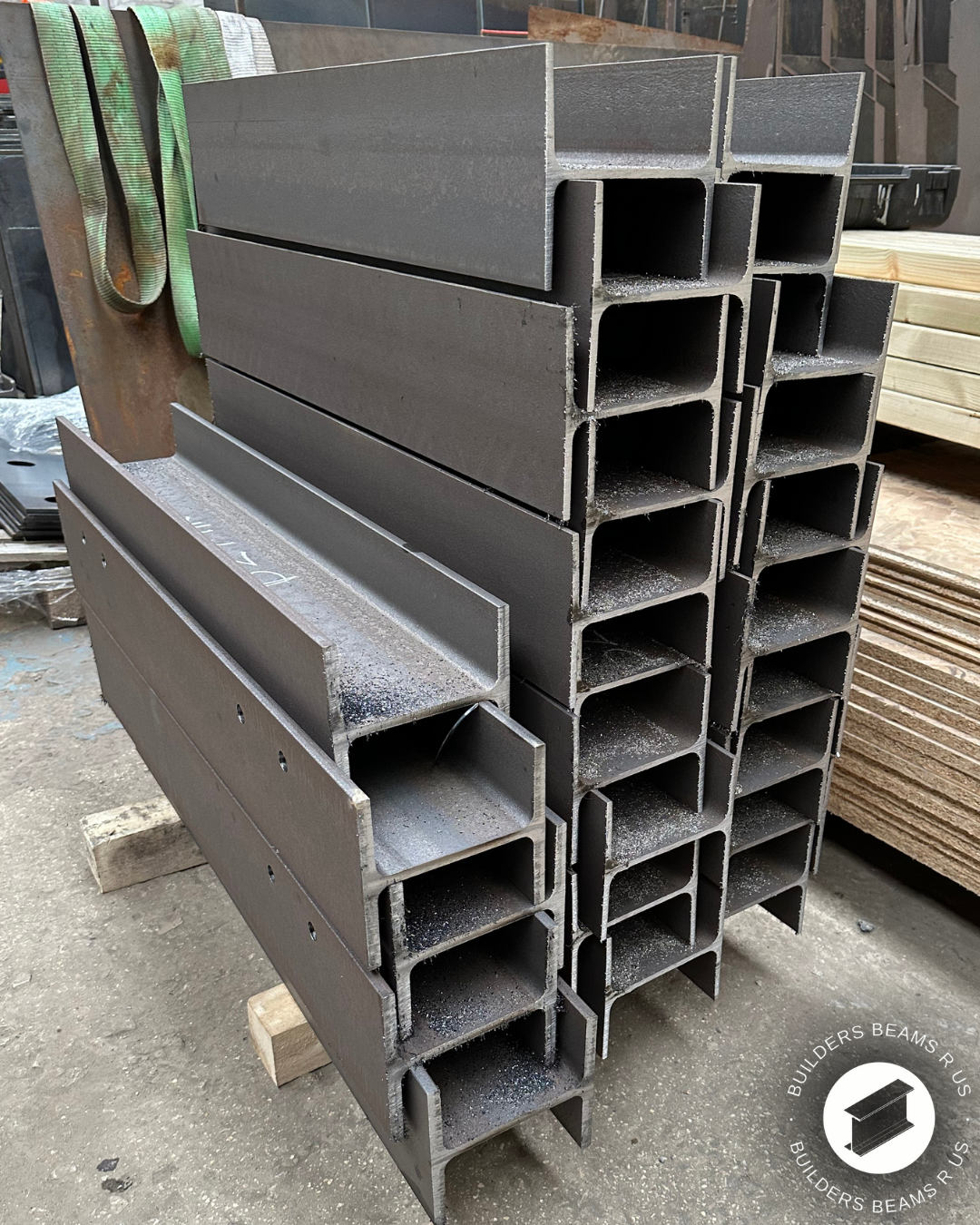
All steel that leaves our workshop is shot blasted as standard at no additional cost. Shot blasting is the foundation that everything else builds on, and it is worth understanding what it does before looking at the coating options.
Shot blasting: the starting point for all our steel
Shot blasting is a mechanical cleaning process. Steel abrasive media is propelled at high velocity against the steel surface, stripping away mill scale, rust, existing coatings and any surface contamination. The result is a clean, bright surface with a consistent anchor profile, which is the microscopic texture that allows coatings to grip.
The cleaning standard we work to is Sa 2.5, which is the internationally recognised grade for near-white metal cleanliness. This is the standard required before most protective coatings are applied, and it is what paint manufacturers specify as the minimum surface preparation for their products to perform as intended.
Shot blasting alone does not provide long-term corrosion protection. It removes the contaminants and prepares the surface, but uncoated shot-blasted steel will begin to re-rust in humid conditions within a matter of hours. For steel that will be installed the same day and encased in masonry or concrete, shot blasting alone may be sufficient. For anything else, a coating is needed.
Primer: the practical choice for most internal structural steel
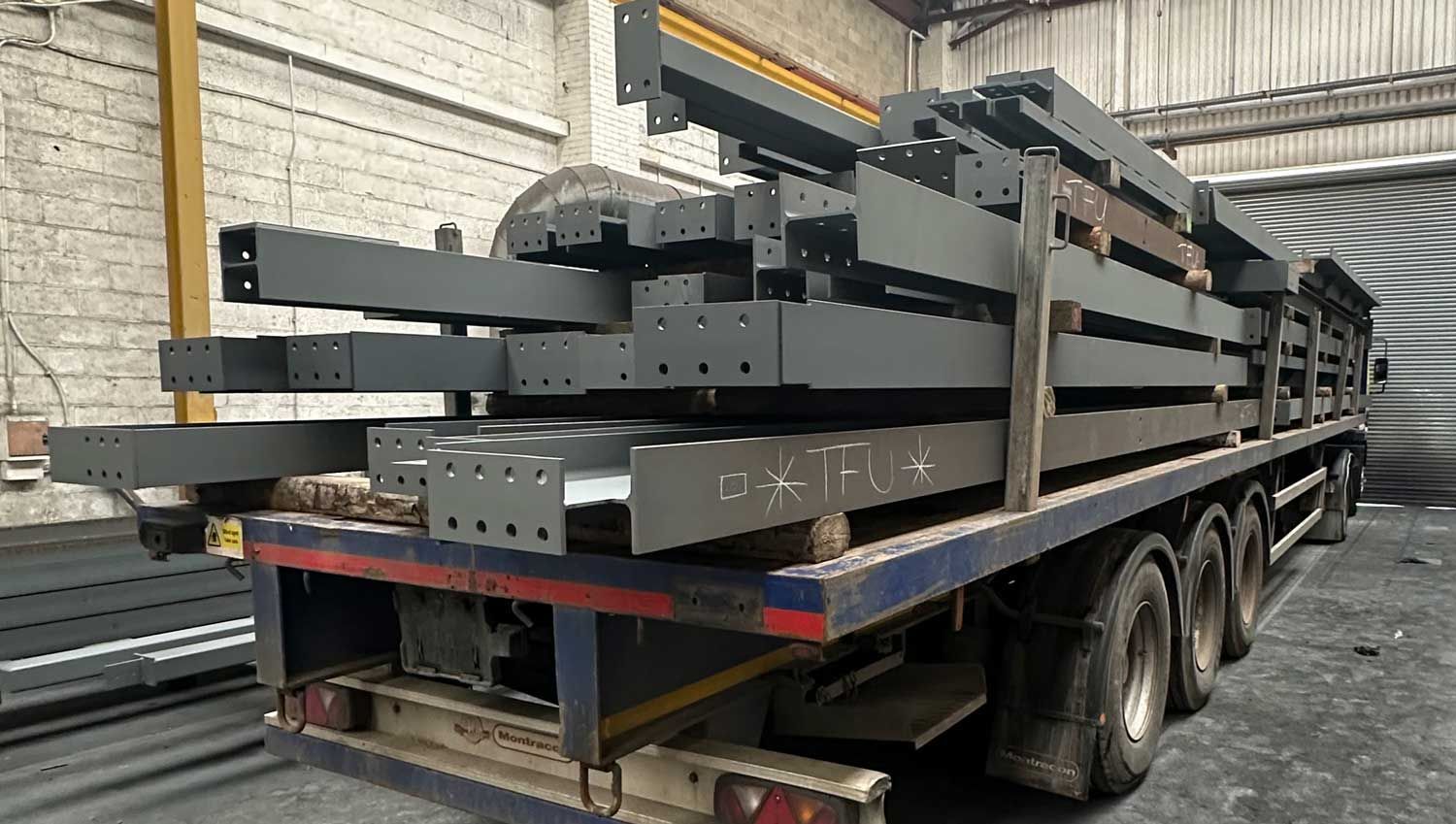
A primer coat applied directly after shot blasting seals the surface and provides a barrier against moisture and oxygen. For structural steel that will be hidden within a building once the project is complete, a single coat of red oxide or zinc phosphate primer is the most common and cost-effective finish.
When primer is the right choice
Primer works well for beams that will be encased in plasterboard, covered by a ceiling, or hidden within a wall construction. It protects the steel during storage, transport and the construction phase, and it provides a good base if the beam is to be overcoated with a decorative finish later. For the vast majority of domestic wall removals, extensions and loft conversions, primer is perfectly adequate.
What primer does not do
Primer is not a standalone long-term corrosion protection system. In exposed or external environments, a single coat of primer will not hold up indefinitely. If the steel is going to remain visible, sit in a damp environment, or be exposed to weather at any point during or after installation, a more robust finish is needed.
Practical notes for site
Primed steel can be overcoated with most standard paint systems once it is on site, which gives flexibility if the client wants a specific colour or finish. Make sure your decorator knows the primer specification so they can select a compatible topcoat. Red oxide primer in particular can bleed through if the wrong topcoat is applied over it without an appropriate sealer.
Powder coating: for steel that will remain visible
Powder coating is a dry finishing process in which electrostatically charged paint powder is applied to the steel and then cured in an oven. The result is a hard, even, durable finish that is significantly more resistant to scratching, chipping and fading than a conventional wet-applied paint system.
When powder coat is the right choice
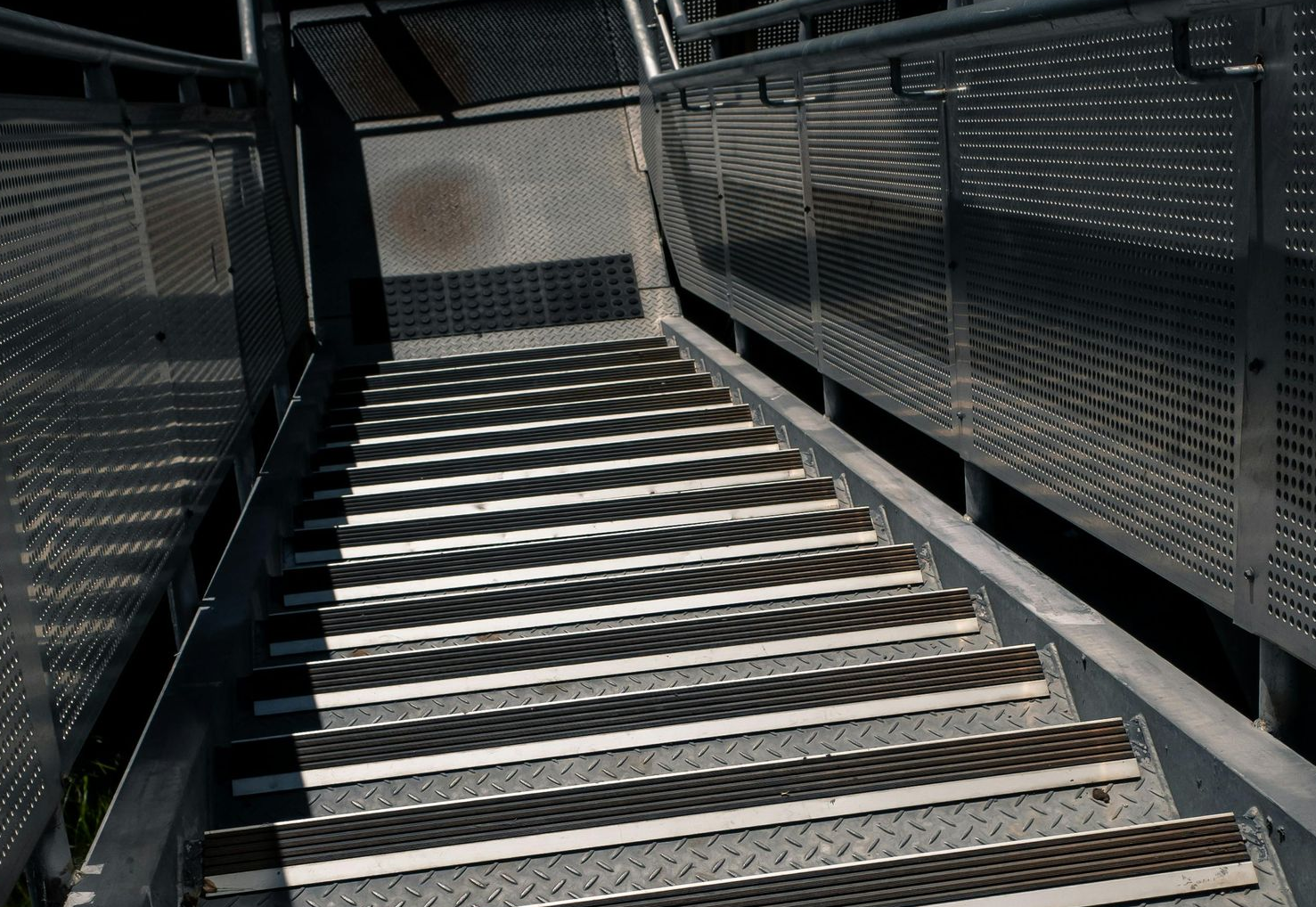
Powder coating is the finish to specify when structural steel will be visible in the finished building. Steel staircases, exposed beams in open-plan living spaces, mezzanine structures, balustrades and feature steelwork all benefit from a powder-coated finish. It is available in a very wide range of colours and textures, including RAL and BS colour standards, so it can be matched to an architect's or interior designer's specification.
It is also a good choice for steel in commercial or light industrial premises where the surface needs to resist knocks and general wear, and for agricultural buildings where a coloured finish is preferred over galvanising.
What powder coat does not do
Powder coat is not the same as galvanising in terms of corrosion resistance. In genuinely exposed outdoor environments, particularly those with salt air, standing moisture or frequent condensation, powder coat alone can be insufficient as a long-term protection system. In those situations, a zinc-rich primer applied over shot-blasted steel before powder coating provides much better performance, and galvanising remains the most robust option for heavily exposed applications.
Powder coat is also less forgiving of poor surface preparation than some builders assume. Any rust, contamination or inadequate shot blasting profile will cause adhesion failure and peeling over time. This is why the shot blasting stage matters so much.
Practical notes for site
Powder-coated steel should be handled carefully during installation. The surface is hard but not indestructible, and scratches or chips that expose bare metal will begin to rust from the edges inward if left unattended. Touch-up paint in a matching colour should be on site before installation begins.
Galvanising: the longest-lasting protection for exposed steel
Hot-dip galvanising involves immersing clean steel in a bath of molten zinc at around 450 degrees Celsius. The zinc reacts metallurgically with the steel surface to form a series of zinc-iron alloy layers, topped by a pure zinc outer layer. The result is a coating that is bonded to the steel at a molecular level rather than simply adhering to the surface.
When galvanising is the right choice
Galvanising is the correct choice for steel that will be permanently exposed to the elements. Agricultural buildings, farm stores, barn conversions, external staircases, structural steelwork in coastal or industrial environments, and beams installed in roof spaces with poor ventilation are all strong candidates for galvanising.
In the Yorkshire and Craven district, where we regularly supply steel for barn conversions and rural agricultural buildings, galvanising is often the default specification for externally exposed or semi-exposed steelwork. The Pennine climate, with its high rainfall and persistent moisture, demands a finish that can genuinely stand up to long-term exposure without maintenance.
Galvanised steel has a typical service life of 50 years or more in many environments, which is why it is specified for infrastructure, bridges and industrial structures as well as agricultural and rural buildings.
What galvanising does not do
Galvanising produces a distinctive silver-grey metallic appearance that some clients and architects find unsuitable for visible interior applications. It can also affect the dimensions of fabricated steelwork slightly, since the zinc coating adds a small amount of thickness, which is worth flagging to your engineer if tight tolerances are involved.
Galvanised steel can be painted or powder coated over the top, but this requires a specific preparation process called sweep blasting and a primer compatible with zinc surfaces. If a coloured finish is needed alongside maximum corrosion protection, this combination approach delivers both, though it adds cost and lead time.
Practical notes for site
Galvanised steel is heavier than the bare section due to the zinc coating, which is worth factoring in when planning lifts and access. Cutting or drilling galvanised steel on site should be kept to a minimum since it exposes bare steel at the cut edge, and adequate ventilation is essential when working with galvanised material, as zinc fumes are hazardous.
How to choose the right finish for your project
In straightforward terms, the decision usually comes down to where the steel is going and whether it will be visible.
Hidden in a wall, ceiling or floor: Shot blasting and primer is almost always sufficient. It protects the steel during the construction phase and provides a base for any subsequent coating.
Visible internally in a domestic or commercial space: Specify powder coat in the colour and texture required. Shot blasting and primer before powder coat gives the best adhesion and appearance.
Exposed to weather or in a damp agricultural environment: Specify galvanising. For steel that also needs a specific colour, discuss a galvanise-plus-powder-coat combination at the time of quoting.
External staircase or balustrade in an urban environment: Either galvanising or a high-quality powder coat system over a zinc-rich primer will perform well in most UK urban climates. Discuss the specific exposure with
your fabricator.
When to specify the finish
The finish needs to be confirmed at the time of placing your order, not as an afterthought once the steel has been fabricated. Shot blasting happens as part of our standard process, but primer, powder coat and galvanising all require additional steps that need to be scheduled into the production process. Changing the finish specification after fabrication can delay your order and in some cases require rework.
If you are unsure which finish is right for your project, call us before you order. We are happy to discuss the application and advise on the most appropriate option. Getting the finish right at the outset saves time and avoids problems on site.
Ordering steel with a finish from Builders Beams R Us
All of our structural steel is shot blasted as standard. Primer, powder coat and galvanising are available on request and should be specified when you place your order. For powder coat orders, please confirm the RAL or BS colour reference and whether you need a gloss, satin or matt finish.
To get a quote or discuss your requirements, call us on 07301 033 581 or email contact@buildersbeamsrus.co.uk. We fabricate in house at our Wakefield workshop and deliver across Yorkshire and the wider UK, typically within a few working days for standard sections.
Related Services:
Surface preparation standards referenced in this article follow the ISO 8501-1 scale for visual assessment of surface cleanliness. Specification of protective coatings for structural steelwork should always be confirmed with your finishing contractor or structural engineer where specific performance requirements apply.